How Reverse Osmosis Works: A Guide to Safe Clean Water in Kenya
How Reverse Osmosis Works: A Guide to Safe Clean Water in Kenya
Access to clean, safe drinking water is vital for public health and industrial productivity. Across Kenya, municipal water supplies and underground boreholes often contain high levels of dissolved solids, fluoride, and microbial pathogens.
Reverse osmosis stands out as the most reliable purification technology available today. This advanced filtration method removes microscopic contaminants that standard filters leave behind.
We have prepared this definitive guide to explain the science of how reverse osmosis works, mechanics, and practical benefits of this technology. You will learn exactly how these systems protect health and support commercial operations.
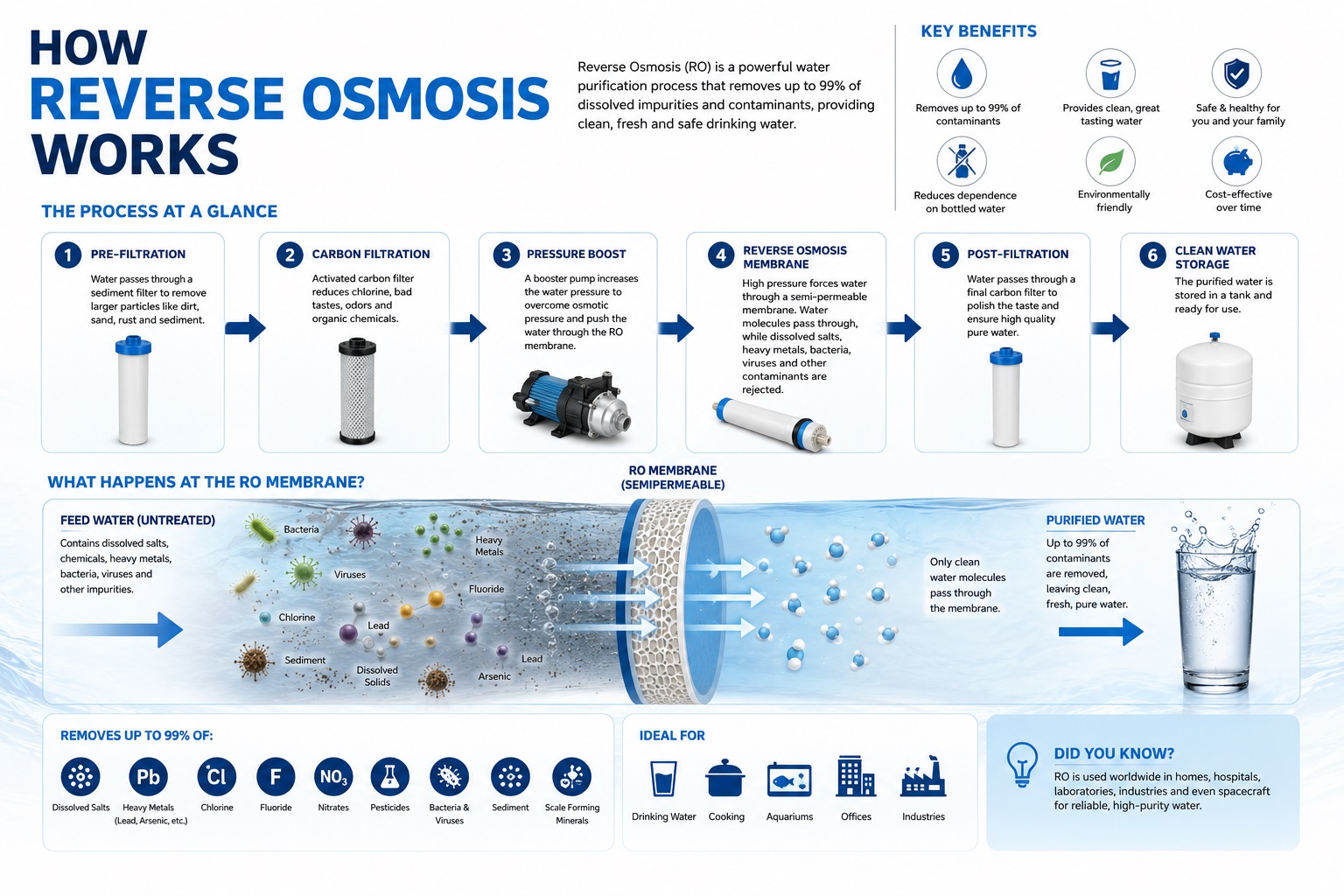
What is Reverse Osmosis and How Does it Work?
To understand how reverse osmosis works, we must first look at the natural process of osmosis. In nature, moisture flows from a dilute solution to a concentrated solution through a semi-permeable barrier. This movement continues until the mineral balance on both sides becomes equal.
Reverse osmosis completely flips this natural cycle. We apply external mechanical pressure to the highly concentrated, contaminated water source. This pressure forces the water molecules through a specialized synthetic membrane against their natural inclination.
The membrane allows pure water to pass while blocking dissolved salts, heavy metals, and micro-organisms. The process splits the feed water into two distinct streams. The purified portion is called the permeate, whilst the rejected wastewater is known as the concentrate.
Osmosis vs Reverse Osmosis
| Feature | Natural Osmosis | Reverse Osmosis (RO) |
| Pressure Direction | Natural osmotic pressure | External mechanical pressure |
| Flow Direction | Low concentration to high | High concentration to low |
| Primary Purpose | Cell hydration and nutrient transport | Water purification and desalination |
| End Product | Balanced equilibrium solution | Purified water (Permeate) |
The Core Science: Understanding the Membrane
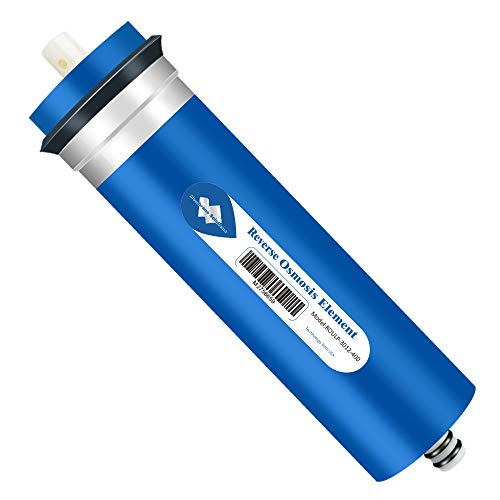
The thin-film composite membrane is the heart of every RO system. These components feature microscopic pores measuring approximately 0.0001 microns. For context, a single strand of human hair is roughly 75 microns wide.
These microscopic pores act as a strict physical barrier against impurities. The membrane separates clean water at a molecular level based on size and electrical charge.
The system rejects molecules that are larger than water or carry a high ionic charge. The technology successfully removes up to 99% of total dissolved solids, including dangerous levels of fluoride and arsenic.
The Step-by-Step Purification Process of a Reverse Osmosis System
A high quality, efficient and/or commercial RO system relies on a multi-stage process to protect the delicate central membrane. Without proper pre-treatment, suspended solids and chemical oxidants will quickly ruin the system.
- The Pre-Filtration Stage
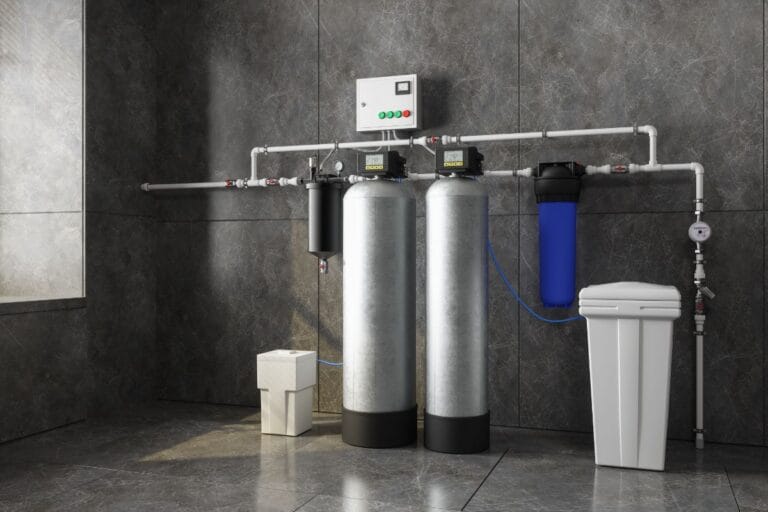
Raw water first enters a high-efficiency sediment filter. This cartridge traps large physical impurities like sand, silt, and rust particles. The water then passes through an activated carbon block filter. This stage absorbs chlorine, volatile organic compounds, and agricultural chemicals, which would otherwise chemically degrade the membrane. - The Reverse Osmosis Membrane
High-pressure pumps force the pre-treated water into the pressure vessel housing the membrane. Pure water molecules pass through the polymer layers and collect in the central core. The rejected contaminants remain trapped on the feed side of the barrier. - The Cross-Flow Filtration Dynamic
Standard filters store trapped dirt inside their media, which eventually blocks the system. RO technology uses cross-flow filtration instead. The feed water flows across the membrane surface rather than directly through it. This continuous flow sweeps rejected contaminants away, which prevents rapid fouling and extends system life. - Storage and Pressure Management
Purified water flows at a slow, steady rate from the membrane housing. The system routes this clean water into a pressurized hydropneumatic storage tank. This container maintains water pressure, ensuring a steady flow whenever you open the tap. - Post-Filtration Polishing
When you open the outlet faucet, water leaves the storage tank and passes through a final post-carbon filter. This polishing stage removes any lingering tastes or odours acquired during storage. The result is fresh, crisp, and completely safe drinking water.
[Raw Water] ➔ [Sediment Filter] ➔ [Carbon Filter] ➔ [RO Membrane] ➔ [Storage Tank] ➔ [Post-Carbon Polish] ➔ [Pure Water Faucet]
↓
[Wastewater Drain]
Key Benefits of Implementing RO Technology
- Removal of Heavy Metals: Eliminates toxic lead, copper, and chromium from older pipes.
- Fluoride Mitigation: Effectively reduces high groundwater fluoride levels that cause dental fluorosis.
- Pathogen Elimination: Blocks bacteria, viruses, and protozoan cysts without requiring harsh chemicals.
- Better Taste: Removes bitter dissolved salts, creating excellent water for drinking and cooking.
- Cost Efficiency: Provides clean water at a fraction of the cost of buying bottled water.
Industrial and Commercial Applications
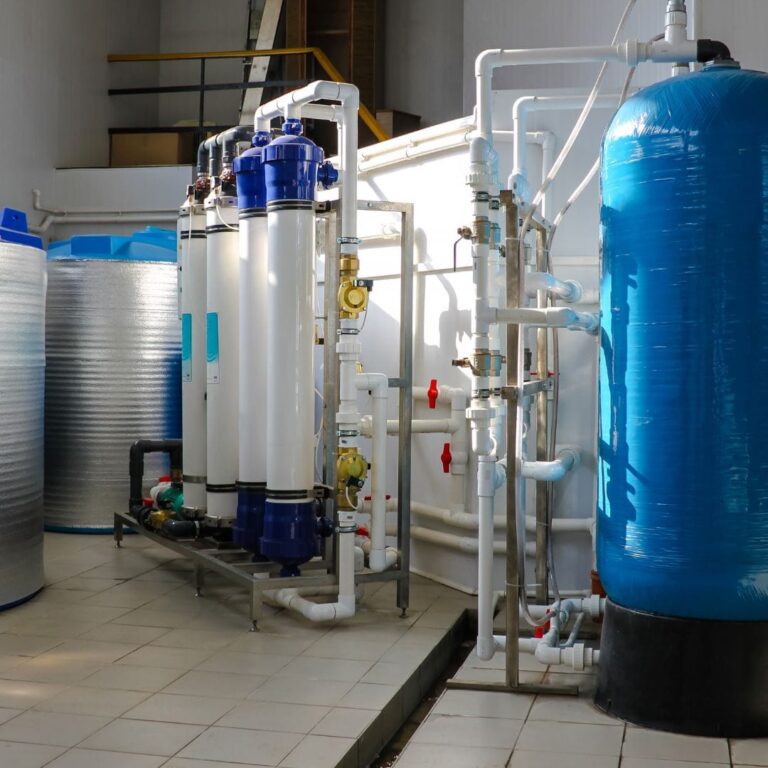
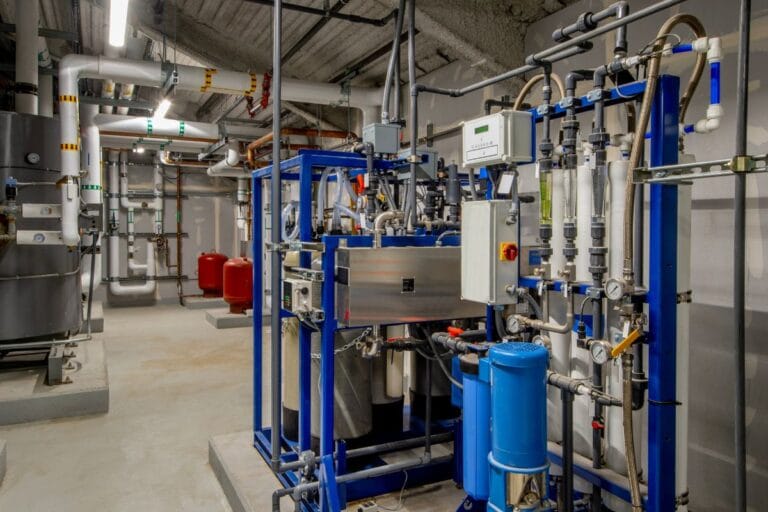
Beyond household kitchens, large-scale reverse osmosis systems keep major industries running smoothly. Commercial facilities use industrial RO systems to produce pure water for manufacturing, pharmaceuticals, and food production.
In steam generation, using purified water prevents scale build-up inside industrial boilers. This protection lowers energy costs and prevents expensive equipment breakdowns.
Borehole desalination plants also use this technology to turn salty groundwater into fresh water. This process helps communities and businesses secure a reliable water supply in dry regions.
Common Myths and Misconceptions
Myth: Reverse osmosis removes all the healthy, essential minerals that our bodies need.
Fact: While RO removes minerals, human beings get the vast majority of their daily nutrients from food, not from drinking water.
Myth: The wastewater generated by an RO system makes the technology wasteful.
Fact: Modern systems use water efficiently to wash away contaminants, preventing blockages. You can also collect this discharge water for cleaning, flushing toilets, or watering gardens.
Why Choose Axiom Water Technologies Reverse Osmosis Systems?
Axiom Water Technologies is a trusted leader in water treatment across Kenya. We design, build, and maintain high-performance reverse osmosis systems for homes, schools, and factories.
Our engineers build robust systems tailored to handle the specific water challenges found in East Africa. We source premium components to ensure your system performs reliably for years to come.
We back every installation with complete technical support, routine servicing, and high-quality replacement filters. Partnering with us means investing in long-term water security and professional peace of mind.
Frequently Asked Questions
- Does reverse osmosis remove borehole salt and fluoride?
Yes, reverse osmosis is highly effective at removing borehole salts, sodium chloride, and high fluoride levels. It consistently lowers total dissolved solids to safe, pleasant drinking levels. - How often should we replace the filtration cartridges?
We recommend changing the sediment and carbon pre-filters every six months to protect the system. The main reverse osmosis membrane generally lasts between two and three years, depending on your source water quality. - Does the system require electricity to work correctly?
Domestic systems can run on standard household water pressure if it stays above 3 bars. However, commercial systems and areas with low water pressure require a small electric booster pump to work efficiently.
Secure Your Water Supply Today
Do not compromise on the health of your family, students, or workforce. The team at Axiom Water Technologies is ready to design a custom water purification system that fits your specific needs.
Contact our technical specialists today for a free water quality consultation and an accurate quote. We will help you select the ideal system to guarantee clean, safe water for your property.
- Call / WhatsApp: +254 702 633 900
- Email: info@axiomwatertechnologies.co.ke
- Physical Address: Toll Station, Near Kimbo, Ruiru, Kenya
- Business Hours: Monday to Friday, 8:00 AM – 6:00 PM
References:
- World Health Organization (WHO): Guidelines for Drinking-water Quality (Fourth edition incorporating the first and second addenda). Located at: https://www.ncbi.nlm.nih.gov/books/NBK579461/
- United States Environmental Protection Agency (US EPA) & WaterSense: Point-of-Use Reverse Osmosis Systems Performance and Specification. Located at: https://www.epa.gov/watersense/point-use-reverse-osmosis-systems
- Veolia Water Technologies & Solutions: Technical Hub on Educational Reverse Osmosis Mechanics and Industrial Applications. Located at: https://www.watertechnologies.com/knowledge-hub/what-is-reverse-osmosis
- Kenya Bureau of Standards (KEBS) via Punto Focal: Official Standard Adoption Document for KS EAS 12: Potable Water — Specification. Located at: http://www.puntofocal.gob.ar/notific_otros_miembros/ken470_t.pdf